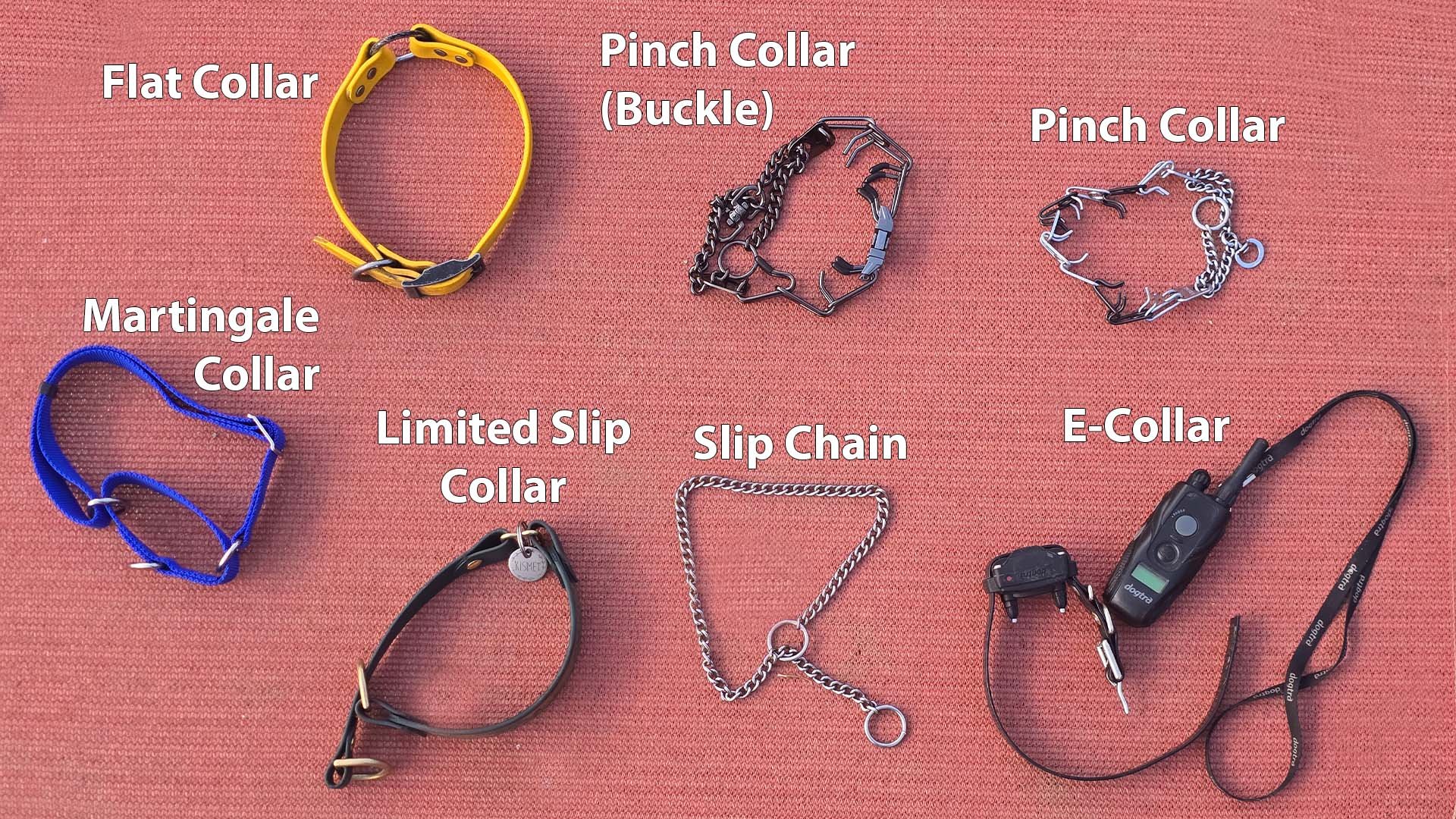
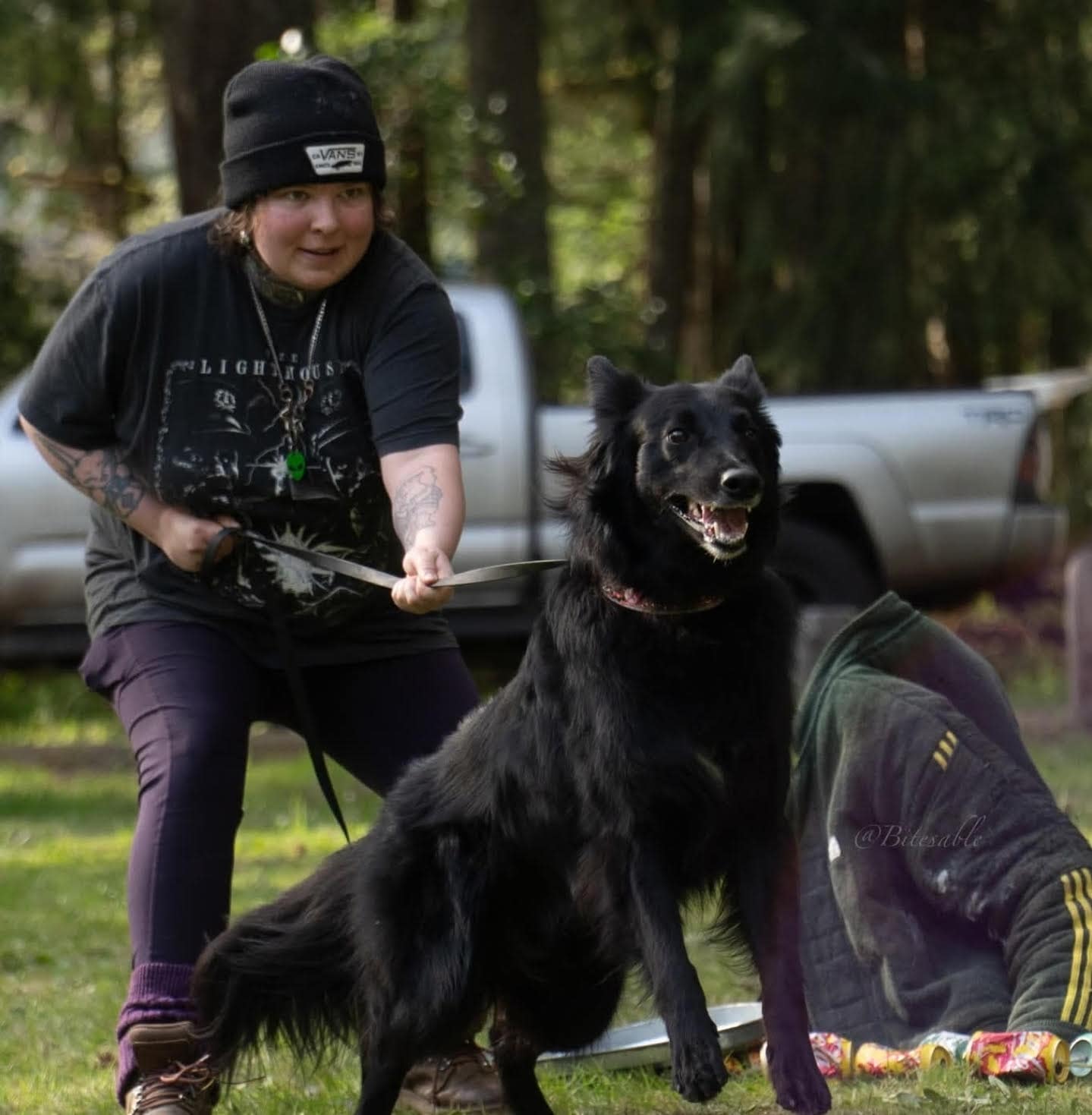
The many types of collars can feel confusing. With so many options, you may ask what each type is used for. The goal of any tool is clear communication and safety, with different dogs having different needs. Here's an honest breakdown of what's in a working trainer's kit — and when each collar actually makes sense.
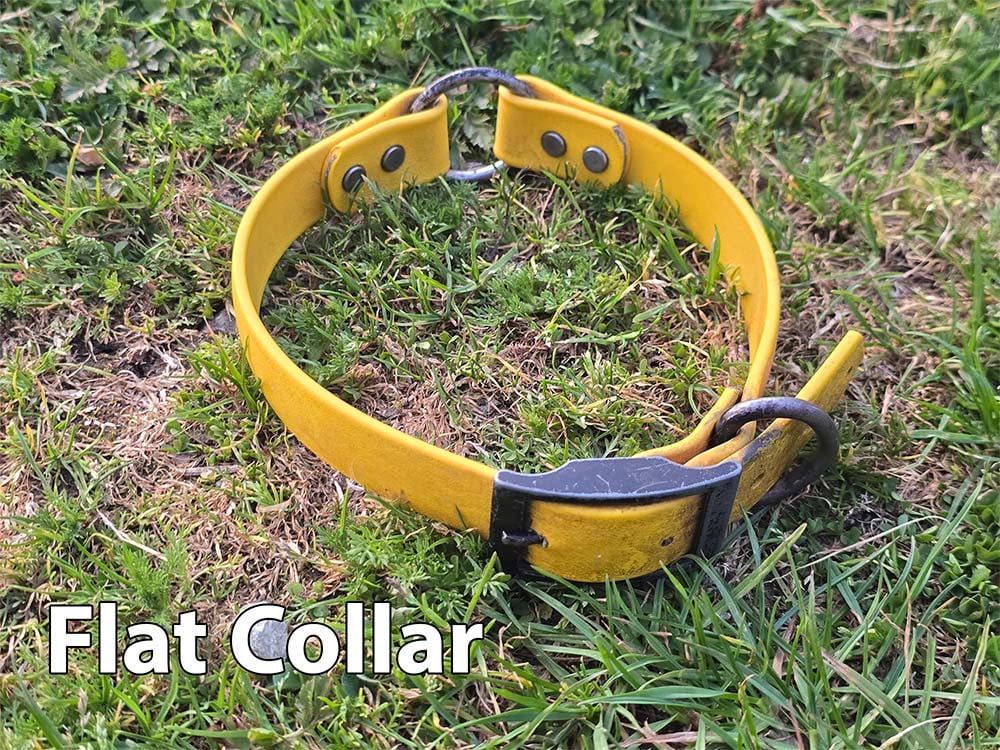
The flat collar is your everyday standard collar. It's great for ID tags and light leash handling. It's not ideal for strong pullers — all the pressure lands directly on the neck, which can be uncomfortable for the dog and ineffective for the handler.
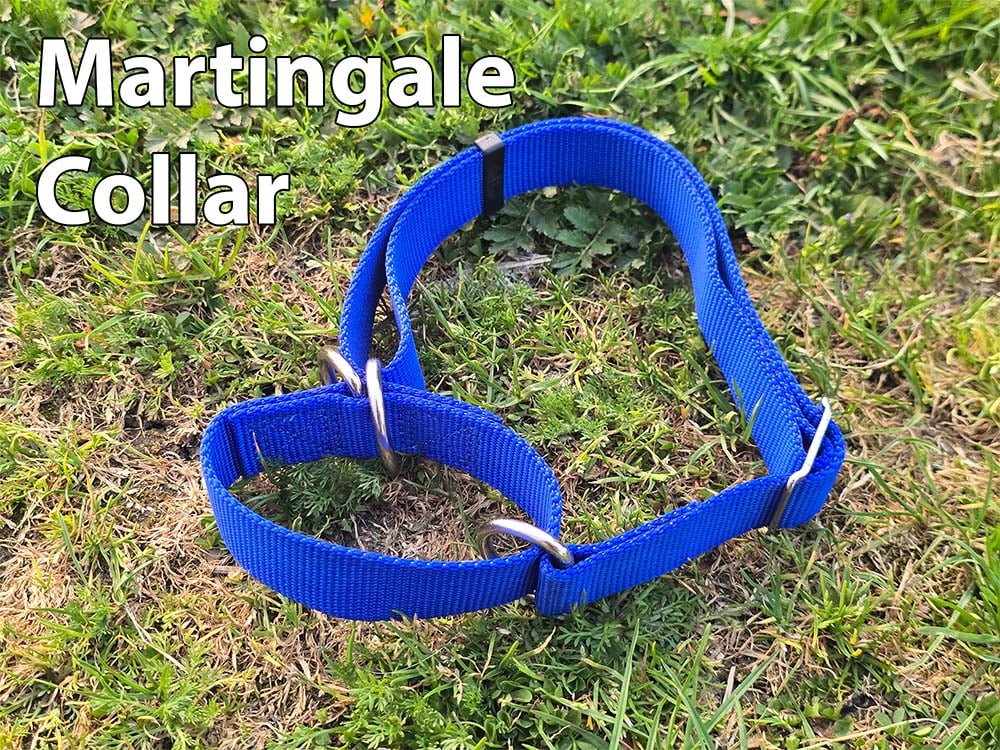
Martingale collars use a dual-loop "cinch" that tightens when dogs apply pressure and loosens when they relax. This helps prevent dogs — especially narrow-headed or wiggly ones — from slipping out of their collar, without putting constant pressure on their neck.
Martingales are one of the most versatile everyday tools. For dogs that back out of flat collars or try to slip their collar when startled, a martingale is usually the first recommendation — the fit is adjustable to exactly what you need, and you can just clip your regular leash on and go. We keep martingales in regular rotation alongside flat collars and reach for them any time a dog needs just a bit more security without adding a prong.
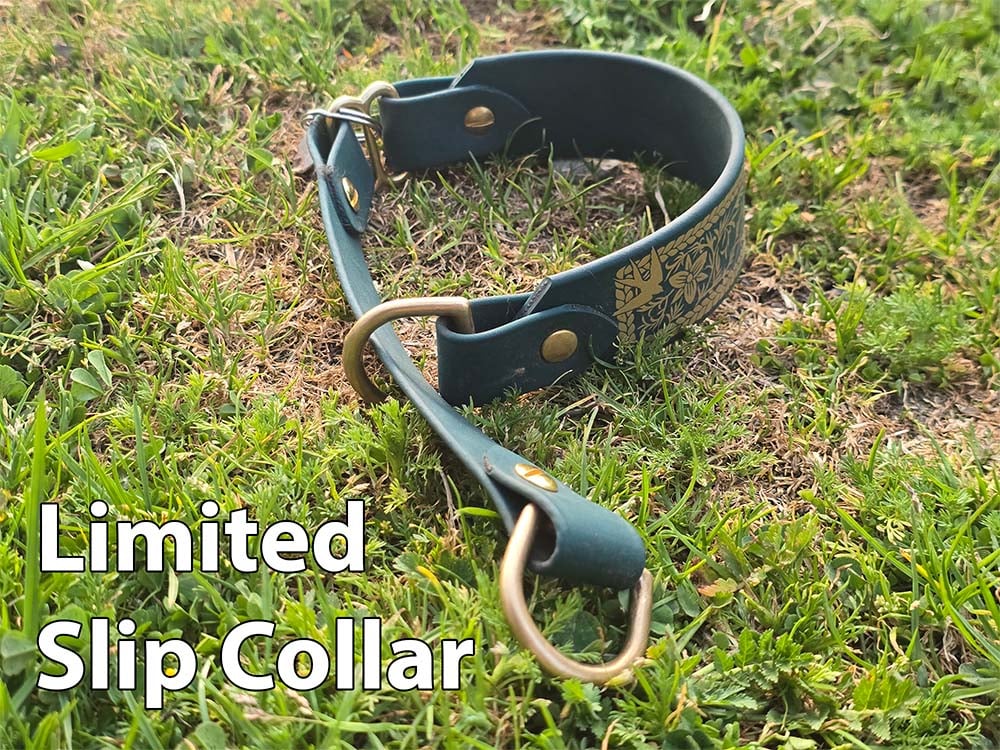
Like martingale collars, limited-slip collars help prevent dogs from backing out out of their collar. Instead of a dual-loop "cinch", limited-slip collars use an inline sliding mechanism that can be smoother to operate.
If your dog backs out of flat collars, tries to slip their collar when startled, or you're just looking for clearer leash communication, both martingale and limited-slip collars are top recommendations.
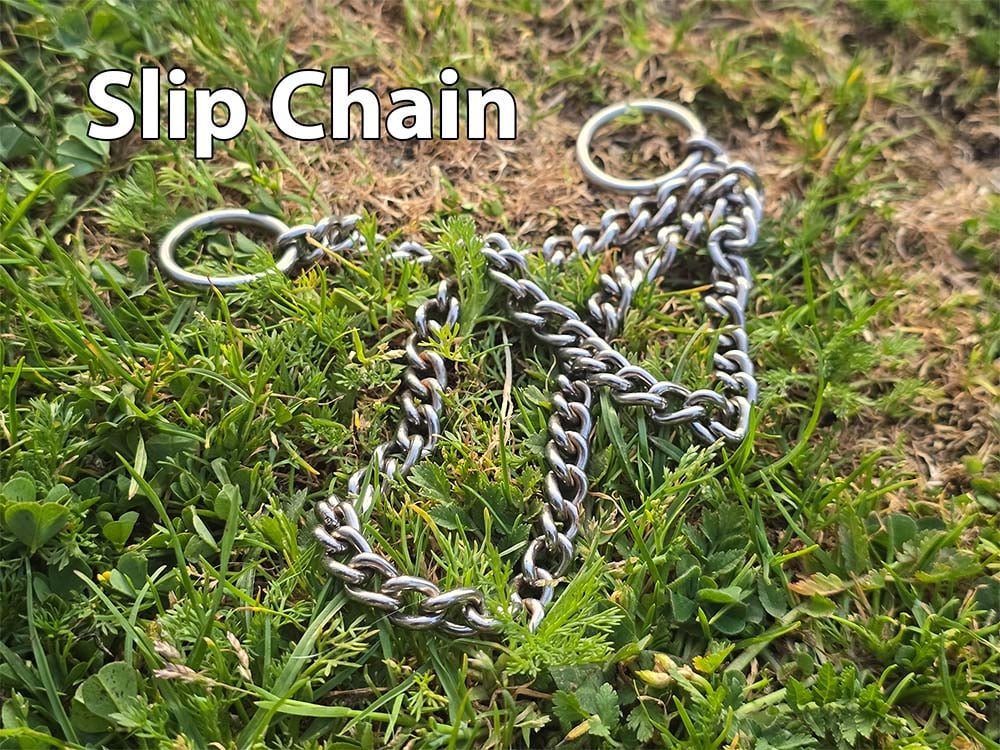
A slip chain — sometimes called a choke chain, though that's a misnomer — is a simple metal chain that slides through a ring to tighten and release. The name "choke chain" gives people the wrong idea about how it's supposed to work. The point isn't to apply sustained pressure that chokes the dog. It's the opposite: quick pops or short tugs that deliver a correction and immediately release. The tightening is momentary — a clear signal, not constant restriction.
The problems come from misuse, not the tool itself. Using it to restrain or hang the dog, or applying steady pressure instead of quick corrections is where use becomes problematic. When used correctly with proper timing and technique, a slip chain is a straightforward communication tool. If a previous trainer used one and taught the owner correct methodology, there's nothing wrong with that.
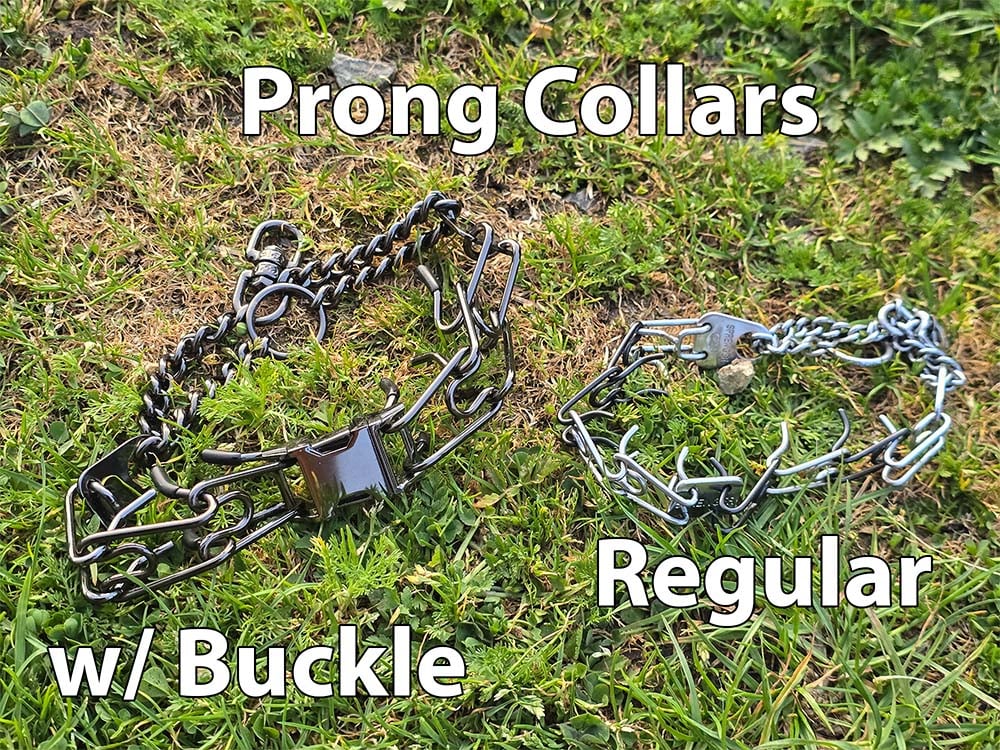
Prong collars use pressure distribution to create even, mechanical pressure around the neck. More pressure points means each correction is lighter and more precise than what you'd get from a flat collar, martingale, or chain. That's the reason to use one — not because it's harsher, but because it's actually more communicative with less force.
Fitting a prong collar correctly matters. The collar should sit high on the neck, above any other collars you have on the dog. The fit needs to be snug — use the two-finger rule: if you can slide two fingers under the collar and they're nice and snug, the fit is right. If you can't get two fingers in, it's too tight. If it's flopping around or sitting down toward the chest, it's too loose and won't function correctly.
When using a prong collar, the leash should be slack at all times except when delivering a deliberate correction. A dog that's allowed to pull constantly against a prong collar will dig in harder and harder and eventually become desensitized to the pressure — which defeats the purpose entirely. The correction is clear and then it's over. The dog should never just be bearing down against constant prong pressure.
Common misuse to avoid: letting the dog pull on it continuously, having it fit too loose and draping down the chest, or leaving it on 24/7. Take it off when you're done training — a dog left wearing a prong collar unsupervised can get it caught on something and seriously injure themselves.
Is it a short-term or long-term tool? That depends entirely on what you're training for. For a household dog working on basic leash manners, you'll likely phase it out once those manners are solid and transition to a flat collar for day-to-day walking. But for dogs in ongoing obedience work or competition training, it may stay in regular rotation indefinitely — not because something's wrong, but because the precision it provides at higher levels of training isn't matched by other collars. Even a well-trained dog can benefit from putting the prong back on occasionally to maintain and sharpen their training. There's nothing wrong with a dog wearing a prong collar long-term if it's being used correctly and purposefully.
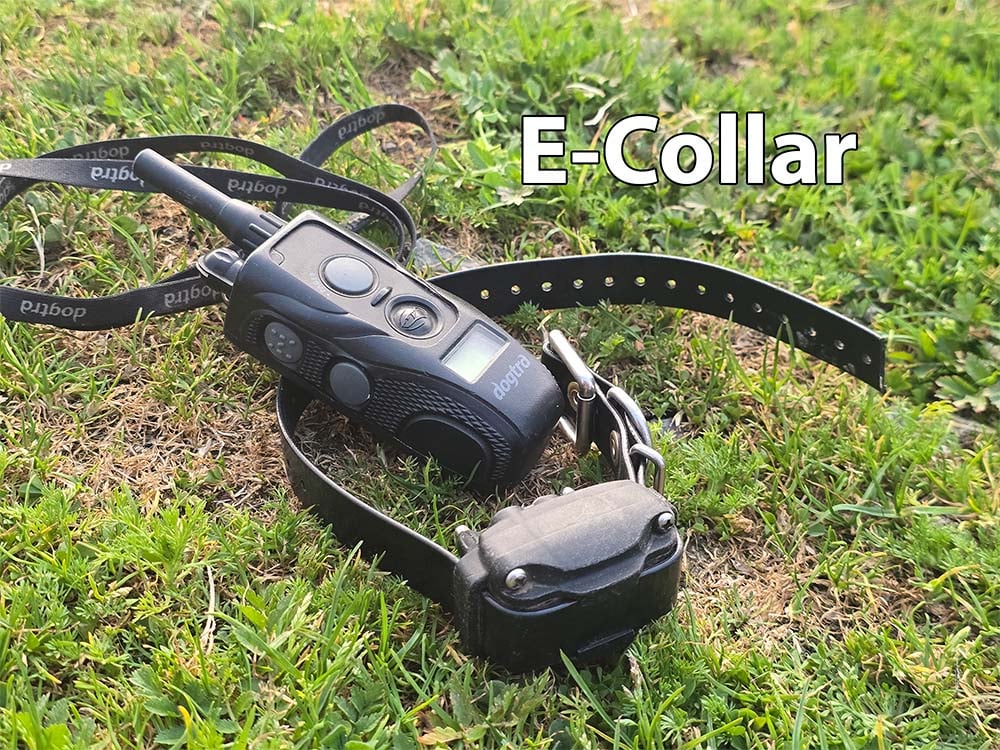
Remote collars use adjustable electronic stimulation, vibration, or tone to give the handler information to give the dog at a distance. When used thoughtfully, the goal is communication — not punishment.
The brand matters. Cheap e-collars don't have the range of stimulation levels needed to work at the right intensity for each dog, and they can cause real harm. Invest in a quality collar — Dogtra is a reliable option with the level granularity needed to work precisely.
How e-collars are introduced: Leash pressure comes first. The dog learns what pressure means and what to do to turn it off. Then the e-collar is overlaid on top of that existing understanding. The dog already knows that leash pressure means do something to relieve the pressure — the e-collar stim becomes the same type of signal. This isn't something you just put on a dog and start using. The foundation has to be there first.
Finding the working level: The correct level is the lowest one the dog notices. Not a flinch, not a yelp — a glance at their neck, an ear twitch, any subtle indication they felt something. That's their working level. Every dog is different. In practice, most dogs fall somewhere in the 5–15 range depending on the brand and individual sensitivity.
That working level is for communication and guidance. When a correction is genuinely needed — a dog bolting toward traffic, chewing through fencing, or in a situation where safety is at stake — a higher level is appropriate to create a clear, memorable boundary. But that's the exception, not how the collar is used day to day.
Head halters fit over a dog's muzzle and behind the ears so the handler can redirect the dog's head with light leash pressure. They're often marketed as a gentle, force-free option — but the reality is more complicated than that.
Dogs' noses are extraordinarily sensitive. The head halter design originated in horse training, and horses have a very different nervous system. In over a decade of working with hundreds of dogs, the consistent experience is that dogs strongly dislike pressure around the muzzle. It's common to see dogs pawing at the halter, rubbing their face on the ground, shutting down emotionally, or showing stress behaviors even after extended conditioning.
The honest assessment: most dogs would prefer a prong collar or e-collar over a head halter. The discomfort around the muzzle is real, even if it's less visible than other tools. Head halters may look gentler, but the experience for the dog is often more aversive than equipment that gets a worse reputation. For this reason, head halters are not a standard recommendation here — there are almost always better options that give the handler control while letting the dog work and move more naturally.
There isn't one collar that's right for every dog. The most important thing is that the equipment matches the dog, the handler, and the goal — and that it's used correctly. No collar or tool replaces good training and fair handling. Fit, timing, and consistency matter more than the equipment itself.
Some dogs do great on simple setups. Others need more structure, especially when safety or a lack of clarity is the issue. If you're not sure what's right for your dog, that's exactly the kind of conversation worth having with a trainer who understands multiple tools and approaches — not just the one they always use.
The goal is always the same: a dog who understands what's being asked, feels supported, and an owner who feels confident guiding them.
Blessings.
Frank Zhirnov