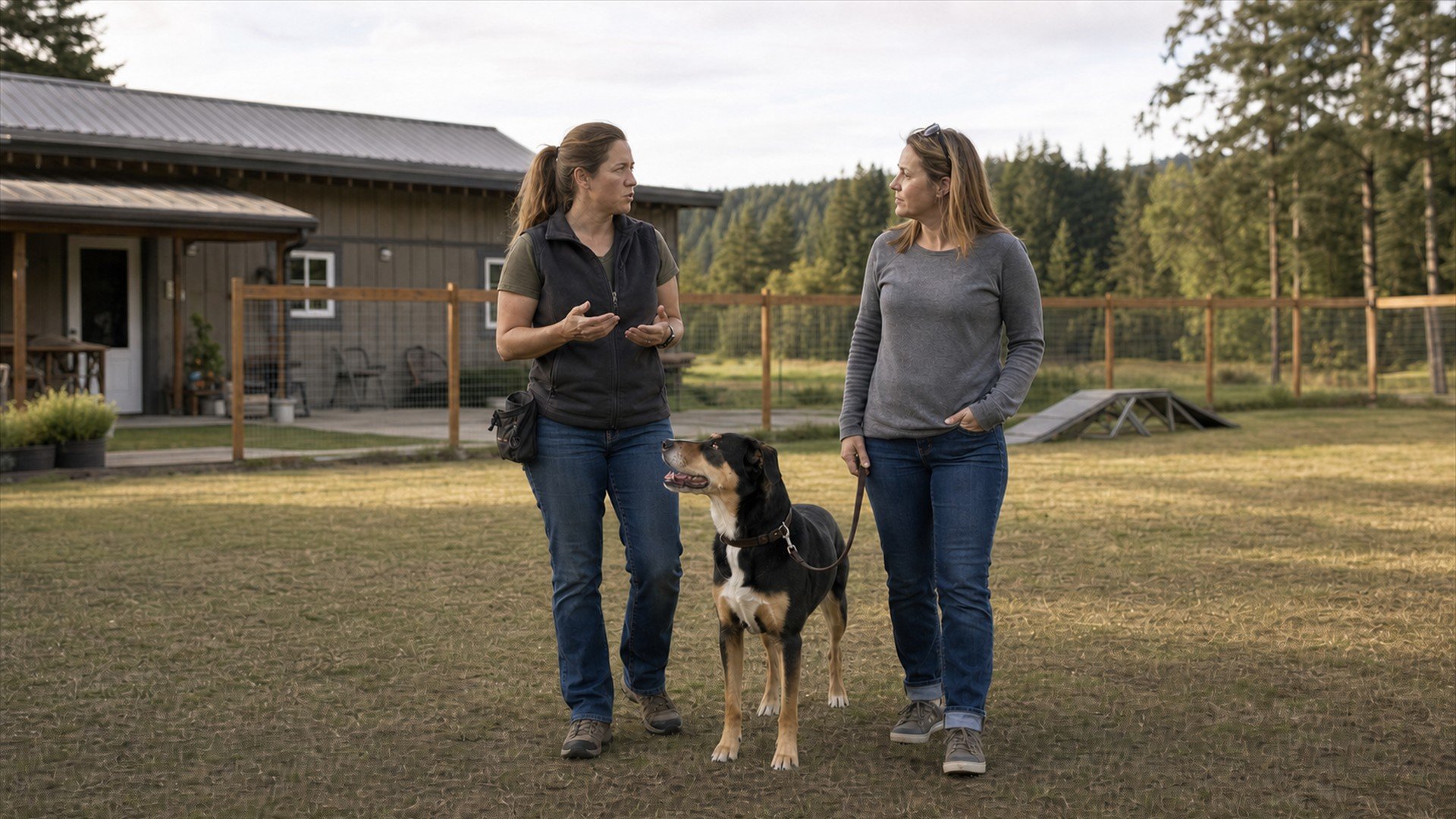
Sending your dog away for training is a big handoff. You are not only choosing a training plan. You are choosing the people, place, and day-to-day care your dog will depend on while you are not there.
My rule is simple: ALWAYS watch a real training session, visit the place your dog will stay, and read reviews before you commit. A polished website can show you the highlights. It cannot show you what an ordinary Tuesday looks like.
You should be able to ask direct questions and get direct answers. If an answer stays vague, slow down. Taking more time now is much easier than trying to solve a problem after your dog is already away from home.
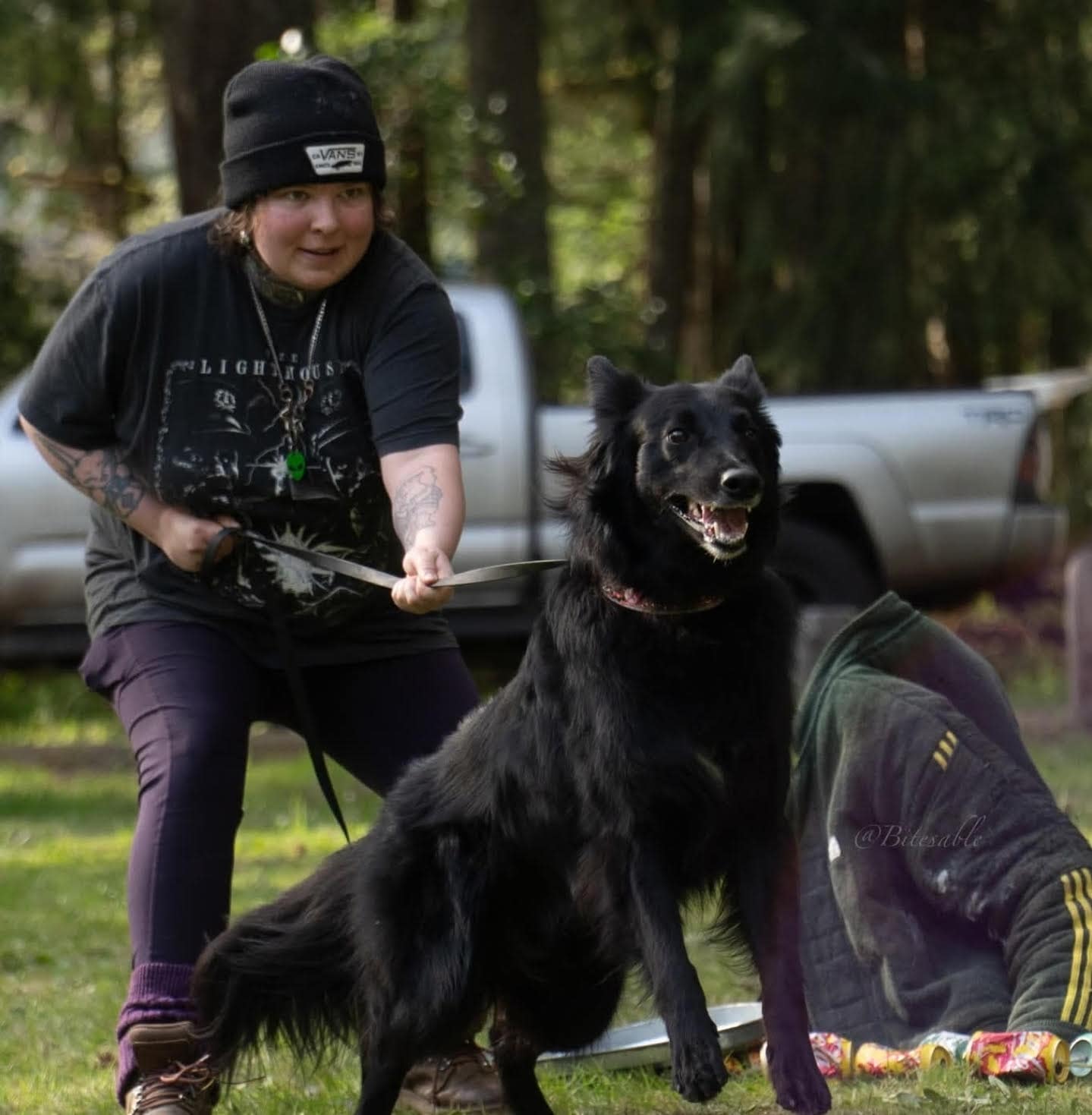
Ask to see the trainer work with a dog during a normal session. You are not looking for a perfect demonstration with the easiest dog in the building. You are looking at how the trainer teaches, how clearly they explain what they are doing, and what happens when the dog does not understand right away.
Ask which parts of the session are typical and which parts are specific to that dog. A trainer may have reasonable privacy or safety limits around certain clients. That is different from refusing to show or explain any real work at all.
The reason this matters is simple: the dog in the finished video is only one moment. The teaching process tells you much more.
Visit the actual property before you decide. See the areas your dog will use, not only the front office or a carefully framed photo.
Ask:
Here in Oregon, emergency planning is not an abstract question. The answer should fit the property, the animals in its care, and the risks around it. You do not need a dramatic speech. You need a clear plan.
Ask the trainer to explain the methods, equipment, and target behaviors before your dog is dropped off. Get the important parts in writing.
The answer should connect the dog, the handler, and the goal. “This is the tool we use for every dog” is not the same as an assessment. Neither is a list of trendy words with no explanation of what the trainer will actually do.
Useful follow-up questions include:
You are not asking for a performance. You are asking for enough detail to give informed consent.
The person who sells the program may not be the person doing most of the daily work. Ask who will handle your dog, what experience that person has with your dog's specific problem, who supervises the work, and who covers days off or emergencies.
Independent credentials can be useful because they give you something concrete to verify. They are still only one part of the decision. Clear answers, relevant experience, real observation, and references from past clients matter too.
Read reviews, including the uncomfortable ones. Then ask the trainer about the patterns you noticed. One angry review does not tell you everything, and a wall of five-star reviews does not answer every question. Look for how the business responds when something does not go perfectly.
A board-and-train program should not end with a handoff at the driveway and a list of commands. Ask how the trainer will teach you what your dog learned.
You should know:
The reason why is that your home is not the training facility, and you are not the trainer your dog spent every day with. You and your dog have to learn how to work as a team in your real life. If a program can explain the dog's stay but not the owner's handoff, half of the plan is missing.
Pause before paying a deposit if:
None of these questions are rude. This is your dog, and you are allowed to understand the plan.
Bring this list when you visit:
Keep the decision practical. You are looking for transparency, a plan that fits your dog, and a trainer who is comfortable explaining the why behind the work.
If aggression, reactivity, or bite history is the reason you are considering board-and-train, a blog post cannot tell you whether the program is appropriate. That decision needs an individual assessment and honest safety boundaries.
Start with Frankly Dog Training's aggression board-and-train assessment path and tell us what you are seeing. The point is to make an individual decision, not force every dog into the same answer.
Blessings.
Frank Zhirnov